


Can you really keep epoxy resin from turning yellow? The short answer is: Almost certainly, if you know the chemistry. OK its not that difficult
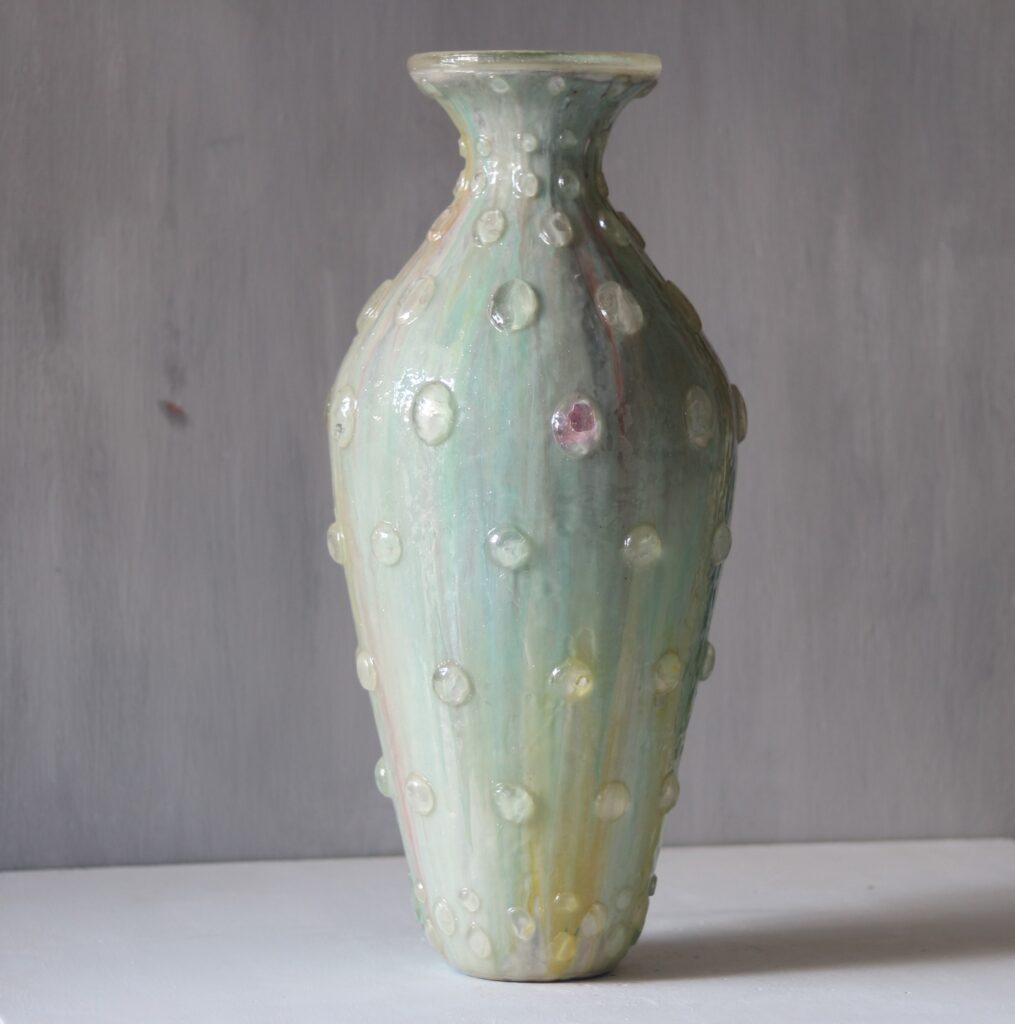
As an artist with seven years of experience—ranging from massive river tables to delicate air-dry clay vases—I’ve seen my work stand the test of time. While many artists fear the inevitable “ambering” of resin, my pieces from 2019 look just as crystal clear today as they did the day I poured them.
Now that I’m shipping my art internationally, “good enough” isn’t an option. To protect my reputation, I’ve developed a two-part strategy that combines industry standards with my own unconventional discoveries.
Part 1: The Standard Foundation (What Everyone Tells You)
Most experts will tell you that yellowing is caused by UV light and heat. To combat this, the “standard” advice is:
- Invest in UV-Stabilized Resins: Look for products containing HALS (Hindered Amine Light Stabilizers). Think of this as “sunscreen” for your art.
- Controlled Curing: Always cure in a dust-free, temperature-controlled environment away from windows.
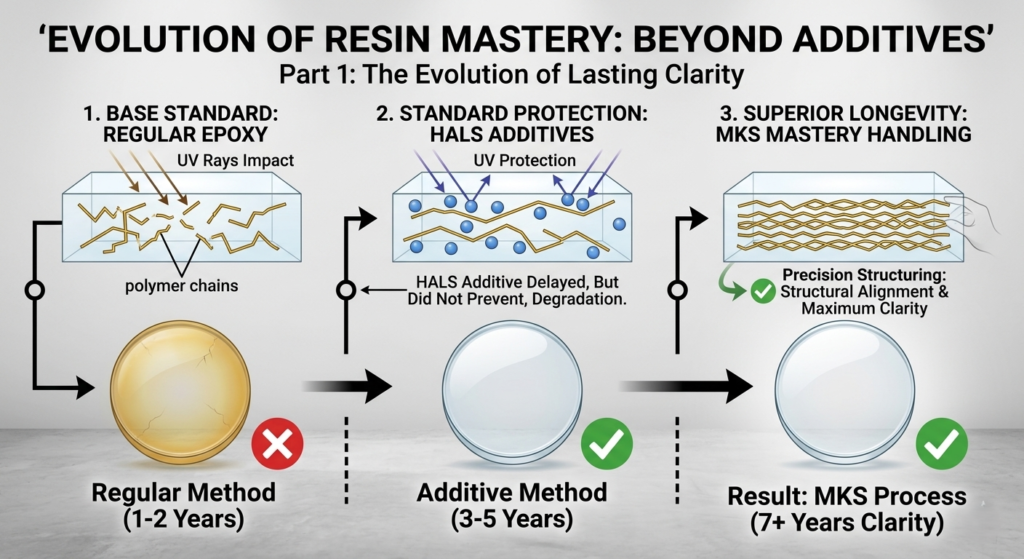
While these steps are vital, they often only delay the yellowing for a few years. To get 7+ years of clarity, you need to look deeper into the chemistry.
Part 2: My Professional Secret—The “Hardener” Factor
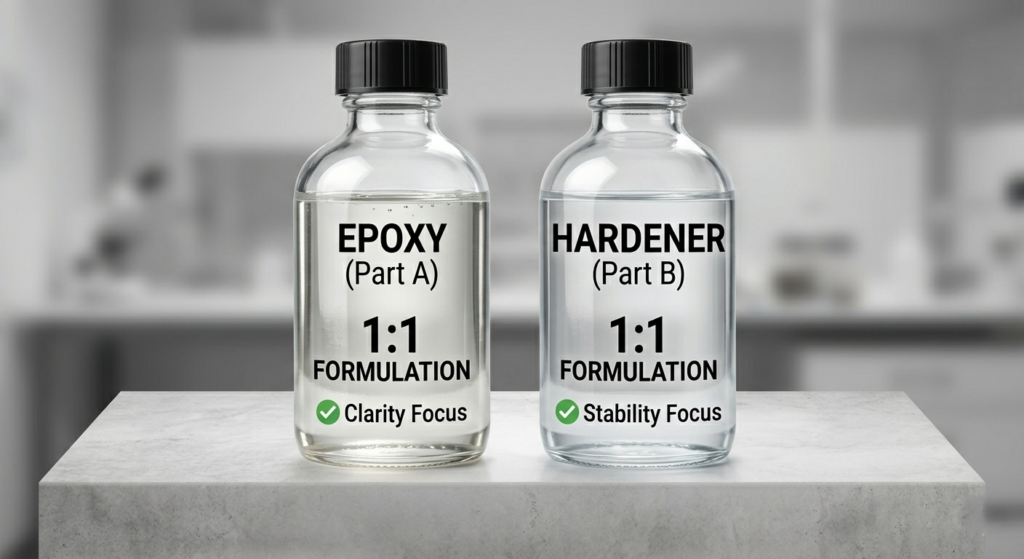
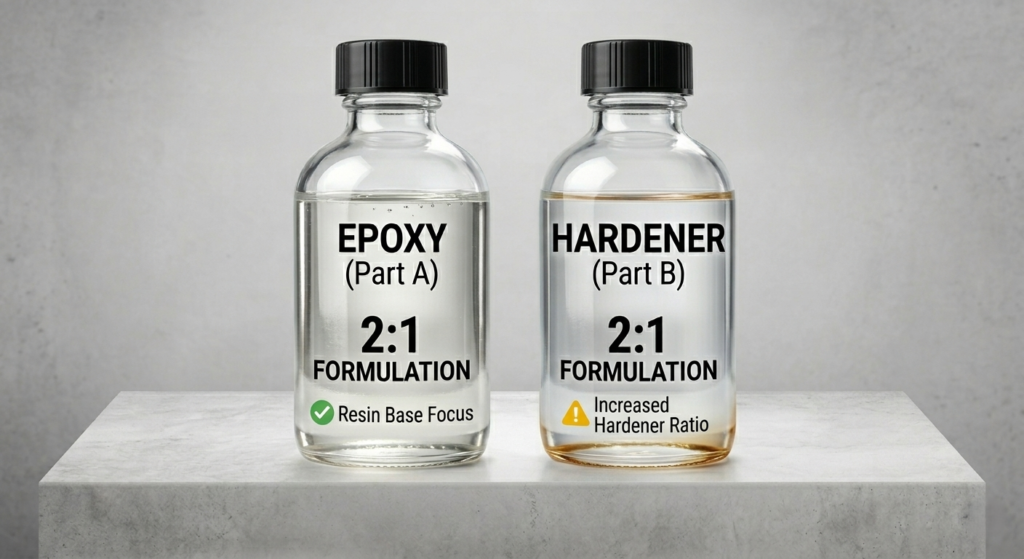
Through years of observation, I noticed something interesting: in the storage cans, the resin (Part A) stays clear, but the hardener/binder (Part B) is what turns yellow over time.
Even with an average 2:1 ratio resin, I realized that the binder is the “weak link.” Based on my experience, here is my personal strategy for long-term stability:
1. Choosing the Right Formulation for the Task
Not all resins are equal. A resin meant for deep-pour molding has a different chemical structure than a coating resin used for paintings. Choosing a formulation specifically designed for your task (like glazing my clay vases) is the first step in ensuring the molecules bond tightly and resist oxidation.
2. The “Sand and Layer” Technique
This is where I differ from the “basic” rules. I’ve found that during the curing process, the binder—being a lighter medium—often settles toward the surface. My theory is that this surface layer is the most vulnerable to yellowing.
My Method: I work in stages and layers.
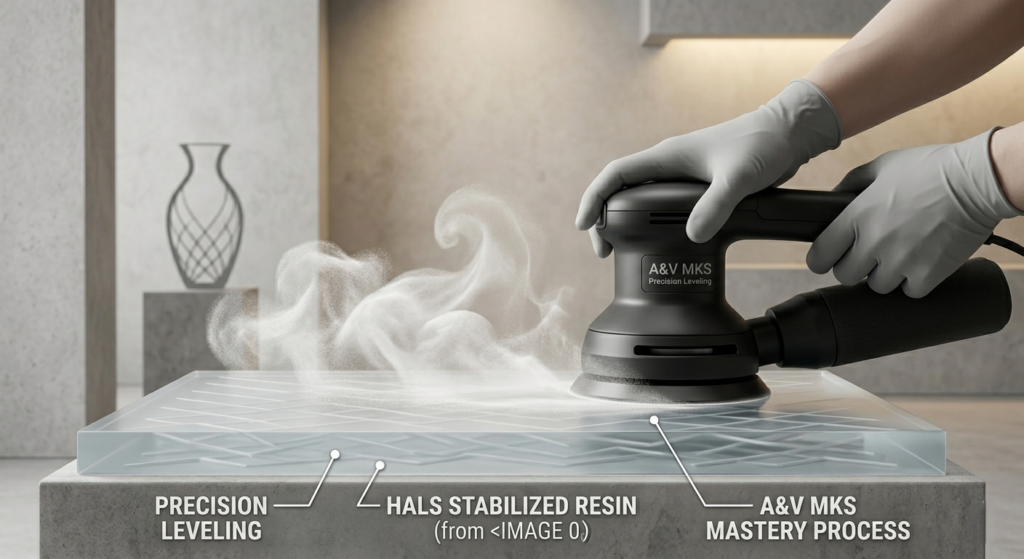
The Process: I pour a layer, let it cure, and then sand the surface.
The Result: By sanding between layers, I am physically removing the excess binder that has migrated to the top. This leaves a more stable, resin-rich foundation. When I apply the final protective coating, the result is a much tougher, clearer finish that doesn’t pale over time.
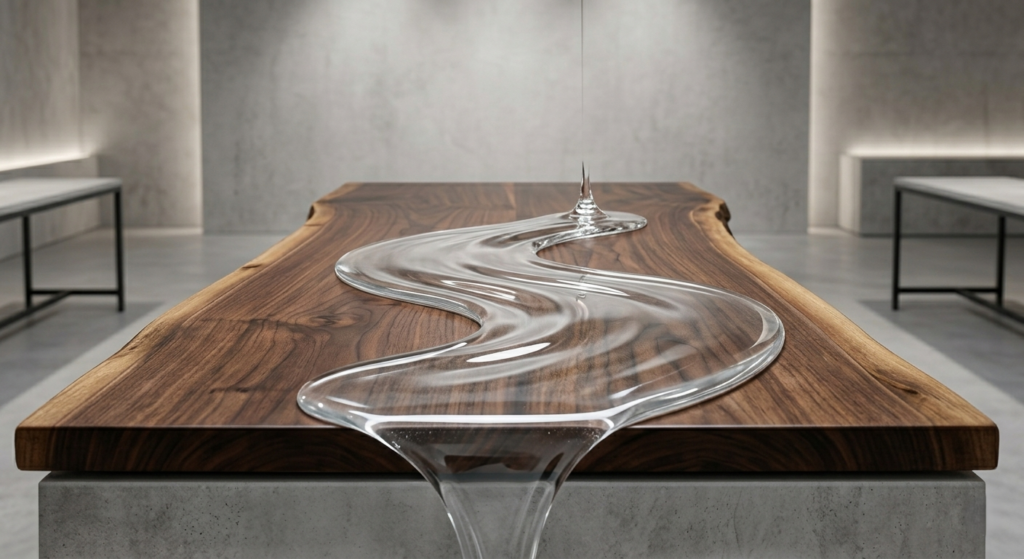
Final Thoughts
By combining high-quality UV-stabilized products with a layering and sanding technique, I have managed to keep my art gallery-fresh for nearly a decade. Whether you are selling locally or shipping across the globe, these extra steps are what build a brand that lasts.
How to Protect Epoxy Resin Outdoors: An Artist’s Secret
“So far, I am very satisfied with my work and the results I’ve achieved with epoxy resin. Even a normal-grade epoxy is good enough to create artwork that shines for a long time.
While I never expose my work to direct sunlight, if I were to create a piece for the outdoors, I would apply a car headlight polish. These polishes are designed to provide UV protection for plastic light covers, which are made from a similar material to resin. I am confident that this technique would help protect vases or sculptures coated with epoxy resin when placed outside.
However, since all of my art is currently designed for indoor use and still looks brand new even after many years, I cannot guarantee 100% results for the outdoors as I haven’t tested it long-term yet. But for indoor collectors, the clarity remains crystal clear.”